Self-Defense in Arizona
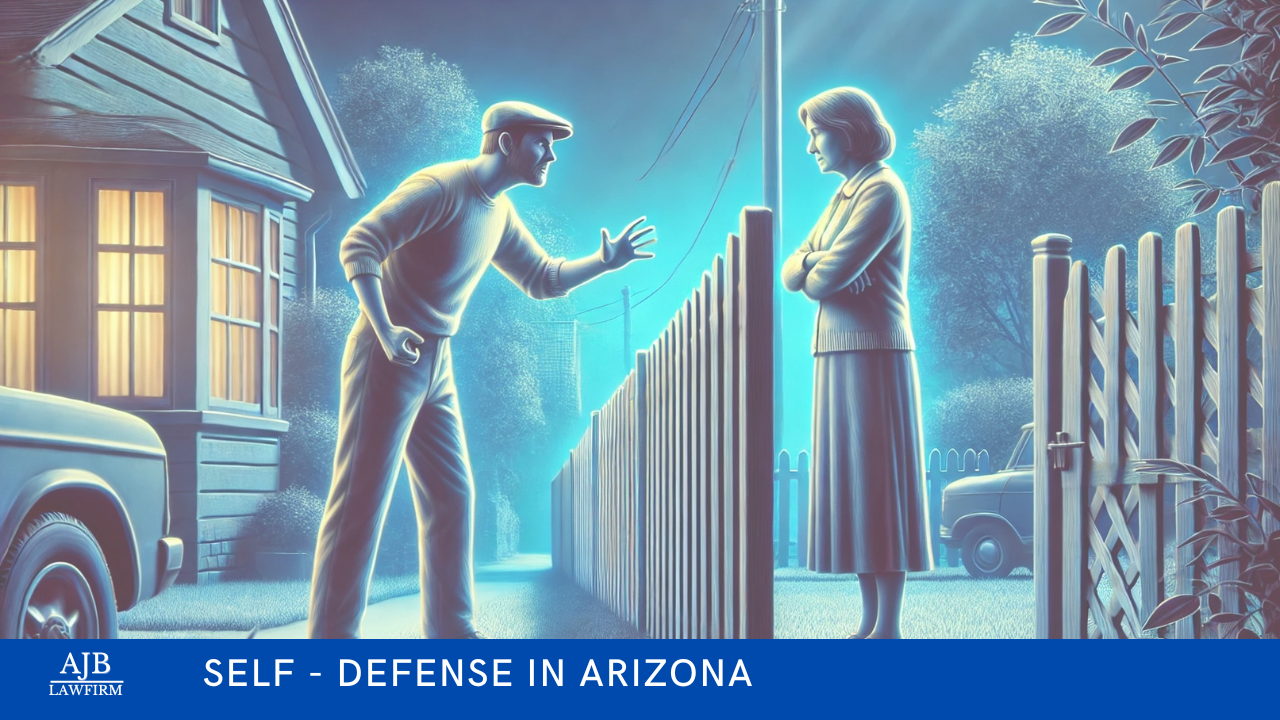
When people think of self-defense, many imagine a sudden altercation where someone is forced to protect themselves from immediate danger. Often, these cases end up being much more complicated in real life—especially when they occur within relationships or involve family members, as can happen in domestic violence situations. The legal principles around self-defense can be confusing, even for those who feel confident they were only protecting themselves. To make matters more complex, there’s an important distinction in Arizona law between true self-defense and what’s sometimes called “mutual combat,” where both parties willingly participate in a fight.
If you live in Tucson or anywhere in Pima County, and you find yourself (or a loved one) facing criminal charges that might involve a self-defense claim, it’s helpful to have an overview of how Arizona law handles these situations. Let’s walk through the major points, focusing on how they might apply to real people in everyday circumstances. We’ll discuss why local representation is so valuable, explain the basic rules of self-defense in Arizona (particularly under A.R.S. § 13-404), and untangle the difference between standing up for yourself and simply engaging in a brawl.
Understanding the Local Context in Tucson and Pima County
If you’ve been charged with a crime in Tucson or Pima County, it’s incredibly important to have someone by your side who knows the ropes locally. Arizona state law might be the same across our desert landscapes, but every courthouse has its own culture. Judges, prosecutors, and even local law enforcement can vary in how they interpret and approach cases. A defense attorney who regularly practices in Tucson’s courts will often have valuable insight into what to expect, the tendencies of certain prosecutors, and the most effective strategies for asserting a self-defense argument.
Beyond the courtroom, a lawyer who is “on the ground” in Tucson or Pima County can move quickly to gather and protect evidence. Surveillance footage from nearby businesses, 911 calls, or statements from neighbors might vanish if not preserved. By working with a local attorney, you’re more likely to have someone who knows how to track down crucial evidence quickly, before it’s lost in the shuffle.
The Basics of Arizona’s Self-Defense Laws (A.R.S. § 13-404)
Arizona has a statutory framework that explains when using force to protect yourself is justified. Under A.R.S. § 13-404, you’re allowed to threaten or use physical force if a “reasonable person” in your position would think it was absolutely necessary to protect against someone else’s unlawful force. There are a few important concepts wrapped up in this:
You’re Reacting to Unlawful Force: You can’t legally claim self-defense if the other person was acting lawfully or didn’t threaten you with immediate harm.
It Has to Be Reasonable and Necessary: The law asks, “Would someone else in this situation, looking at the same facts, believe that this level of force was the only option?” If the answer is yes, you’re more likely to be protected by self-defense.
Proportionality Matters: The amount of force you use should align with the amount of force you face. Using more force than necessary—or continuing to use force after the threat is gone—can undermine the claim.
One particularly powerful aspect of Arizona’s approach is that once you bring forward any evidence that suggests self-defense, the burden usually shifts to the State to prove beyond a reasonable doubt that you were not acting in self-defense. That might sound like a technical detail, but in the courtroom, it can be huge. It means that if you raise a credible self-defense argument—supported by at least some evidence—the prosecution has to work harder to show that your actions fell outside the law’s definition of self-defense.
Domestic Violence and Self-Defense: When Emotions Run High
Self-defense claims come up regularly in situations labeled as “domestic violence.” These might involve spouses, partners, siblings, or roommates. The difficulty is that domestic disputes often occur behind closed doors, and it can be hard for law enforcement or prosecutors to figure out who truly initiated physical contact. In some cases, the person labeled as the “victim” in police reports may have been the first aggressor. Yet, the moment officers arrive, they make a quick determination about who seems most reliable.
If you’re on the receiving end of a domestic violence charge, you might feel shocked—especially if you believe you were simply defending yourself. The law in Arizona allows you to raise that defense, even in domestic contexts, as long as you can show (or at least suggest) that you faced an imminent threat of unlawful force and responded accordingly. This is another scenario where local expertise in Tucson courts can come into play. Presenting a domestic violence case as self-defense requires a delicate touch; these cases often have a lot of emotional history, and prosecutors sometimes assume they know the dynamics of an intimate relationship based on stereotypes or incomplete information. A skilled attorney can help uncover the bigger picture.
The Concept of Mutual Combat
Now, let’s talk about mutual combat, which can muddy the waters of self-defense claims. If two people get into a fight willingly—say they both square up in a parking lot or decide to “take it outside” after an argument—then the law may see that situation as mutual combat rather than classic self-defense. Both parties are essentially consenting to fight. If that’s the case, it’s much harder to argue, “I was just defending myself.”
However, real life isn’t always black and white. Just because you yelled back at someone doesn’t automatically mean you agreed to a mutual fight. Sometimes, a heated argument escalates, and one person tries to back away or calm things down, but the other person refuses and attacks. In those moments, you might still have a legitimate self-defense case, provided that you truly tried to withdraw or showed you didn’t want to keep fighting.
In evaluating mutual combat vs. self-defense, a court might look at details like:
Whether you or the other party clearly tried to end the confrontation.
Who used the first physical move and who responded, if any.
Whether, after initial contact, one person escalated the situation by bringing out a weapon or throwing the first punch when the other was trying to leave.
That’s why you’ll often hear defense lawyers ask clients, “Did you have the opportunity to walk away? Did you try?” If the answer is yes, and the other person kept pursuing you, you’ll have a stronger self-defense claim. On the flip side, if you both stepped outside, set your phones on a nearby table, and agreed to “fight it out,” the State might argue that this was mutual combat and neither side can simply say, “I was just defending myself.”
Video Footage: A Potential Game-Changer
Because many fights and domestic disputes happen out of public view, the facts are frequently contested. This is why video evidence has become a critical factor in modern criminal defense. Nowadays, many conflicts are caught on cell phone cameras, home security systems, or surveillance footage from local businesses. When an altercation is recorded, the difference between “you attacked first” and “I defended myself” can sometimes be much clearer.
There have been numerous cases in the Tucson area where a single piece of footage has changed the entire direction of a prosecution. For instance, if a recording shows that the person calling the police actually initiated the physical contact, or if they didn’t back down when you tried to leave, that can strongly support a self-defense claim. It’s even better if the audio is clear enough to hear you say something like, “Stay away! Don’t put your hands on me!” That can help illustrate you were trying to avoid a full-blown fight.
The big caveat with video evidence is that it’s vulnerable to being erased, lost, or overwritten. If you’ve been involved in any kind of serious altercation, it’s wise to contact a Tucson criminal defense lawyer right away, especially if you suspect there might be footage from a nearby security camera. An attorney can send a preservation request to the camera’s owner, whether it’s a business or a private individual, to make sure the recording doesn’t vanish.
Proportionality and Reasonableness
Whenever self-defense comes up, people often ask, “How do I know how much force is too much?” The Arizona statute mentions that your response should be something a reasonable person would consider immediately necessary to protect against another’s use or attempted use of unlawful force. If someone shoves you lightly, and you respond by pulling a gun and firing, that might not look reasonable unless you believed you were facing a lethal threat (or something close to it).
One of the factors that courts and juries consider is whether you stopped using force once the immediate danger passed. Did you push your attacker away and then try to flee, or did you continue hitting them even after they were defenseless? The line between genuine self-defense and potentially criminal behavior can be determined by those extra few seconds when a threat is neutralized. If you keep going after the other person is no longer a threat, you risk being seen as the aggressor.
Of course, what’s “reasonable” can depend on who is involved. A smaller person facing a bigger aggressor, or someone with a disability being confronted by an able-bodied individual, might be justified in using a higher level of force to defend themselves. Likewise, if a person brandishes a weapon or has a reputation for serious violence, that context might make it more reasonable for you to respond firmly in order to protect yourself.
The Role of Consistency
If you do end up in court, realize that consistency is extremely important. Your story about what happened needs to align with any video footage, witness accounts, or other evidence. People sometimes forget the exact sequence of events if they’re panicked or upset during a confrontation, but changing your version of what happened after the fact can severely hurt your credibility. Prosecutors will point to those inconsistencies to argue that you’ve just “made up” the self-defense claim.
That doesn’t mean you have to remember every single detail, especially under stress, but it does mean you should avoid guessing or making statements you aren’t sure about. An experienced Tucson defense attorney can help you prepare to talk about the incident in a clear, factual way. It’s also wise to stay off social media when facing criminal charges. You wouldn’t believe how often a casual joke or a short-tempered comment online can be taken out of context and used to contradict the story you tell in court.
Why Timing Matters
If you think you have a self-defense case, it’s best to reach out to an attorney as soon as possible. In Tucson, evidence can vanish quickly—video gets overwritten, and witnesses might move or simply forget details. The earlier you start working with a lawyer, the more time they have to gather crucial information and build a solid narrative of what happened.
Remember, too, that prosecutors sometimes file charges even when self-defense seems apparent. They may only have a one-sided account from the alleged victim or from someone who didn’t see everything. When your attorney gets involved early, there’s a chance to present evidence to the prosecutor that might lead to charges being dropped or reduced before the case escalates further. This proactive approach can save you a lot of stress and potentially spare you from a full-blown trial.
Self-Defense vs. Deadly Force
Not every self-defense scenario involves deadly force, but it’s worth mentioning that Arizona law does address when lethal force is justified. Under A.R.S. § 13-405, you may be justified in using deadly force if you have a reasonable belief it’s necessary to protect yourself from another’s use—or attempted use—of deadly physical force. Essentially, if someone is trying to kill you or inflict serious bodily harm, you don’t have to wait until it’s too late before defending yourself with equal force.
However, the burden of justifying deadly force is significant. Courts look at these cases very carefully, because taking someone’s life or risking their death is drastically different from, say, pushing someone away during a scuffle. Whenever lethal force is used, the entire incident will be scrutinized to see if a “reasonable person” in the same situation would truly have felt there was no other option to avoid grievous harm or death.
Common Questions About Self-Defense
A lot of folks in Tucson or across Pima County wonder if Arizona has a “stand your ground” law. While Arizona doesn’t use the exact wording of “stand your ground,” it does not require you to retreat if you’re in a place where you have a legal right to be. If you didn’t provoke the confrontation, you are generally allowed to defend yourself without trying to run away first.
Others want to know if using a weapon in self-defense is automatically a crime. It isn’t—again, it depends on whether using that weapon was a reasonable response to the threat you faced. If someone attacks you with a baseball bat, for instance, responding with a weapon might well be considered justified. But if they poked you in the chest with a finger, pulling a weapon might look wildly disproportionate unless there was some other huge factor at play (like you believing they were about to pull a gun or commit some lethal attack).
Finally, people ask, “What if the other person starts it, but I finish it?” That’s where escalation comes in. Just because the other side started the fight doesn’t give you a blank check to go beyond what’s necessary to stop the threat. If your reaction goes much further than what a reasonable person would consider self-defense, you might lose the protections of A.R.S. § 13-404.
Bringing It All Together
To sum it up, Arizona law provides strong protections for people who defend themselves from imminent harm—especially once there’s even a small piece of evidence that points to self-defense. At that point, the prosecution must prove beyond a reasonable doubt that you did not act in self-defense. This can be a game-changer in court, particularly when video evidence supports your narrative, or when witnesses confirm you were only protecting yourself.
That said, it’s important to watch out for pitfalls: overreacting, continuing to use force after the threat is gone, or willingly joining a fight that you could have safely avoided. These factors can transform what might have been a solid defense case into something much more difficult. Local knowledge, immediate evidence preservation, and a clear, consistent account of events are crucial. If you’re in Tucson or Pima County and believe you have a self-defense claim—or if you’re just concerned about potential charges—it’s wise to contact a criminal defense lawyer as soon as possible.
Final Thoughts and a Disclaimer
Life can get messy. Sometimes, you’re just going about your business when a confrontation arises and you feel you have no choice but to defend yourself. Arizona’s self-defense laws are designed to protect individuals in those kinds of situations, but they’re not a free pass to use force under any circumstances. Understanding what the law allows and how it applies in Tucson courts is the first step to ensuring your rights are protected.
Keep in mind that this article is for informational purposes only. It is not legal advice. The specifics of your case, and how the law applies to it, can vary depending on the evidence and the details of the incident. If you need legal guidance, consult an experienced Tucson criminal defense attorney who can offer personalized counsel tailored to your situation. Acting early, preserving evidence, and maintaining consistency in your account can make all the difference in a successful defense.